
What Is Modern Classic Interior Design?
Modern Classic interior design is the refined balance between traditional elegance and contemporary simplicity. It merges the symmetry, proportion, and architectural detailing of classical European interiors with the clean lines and restraint of modern design. This style aims for timeless sophistication—creating spaces that feel luxurious without being heavy, and elegant without feeling outdated. It captures the permanence of traditional interiors while maintaining the freshness and clarity of modern living.
Key Characteristics
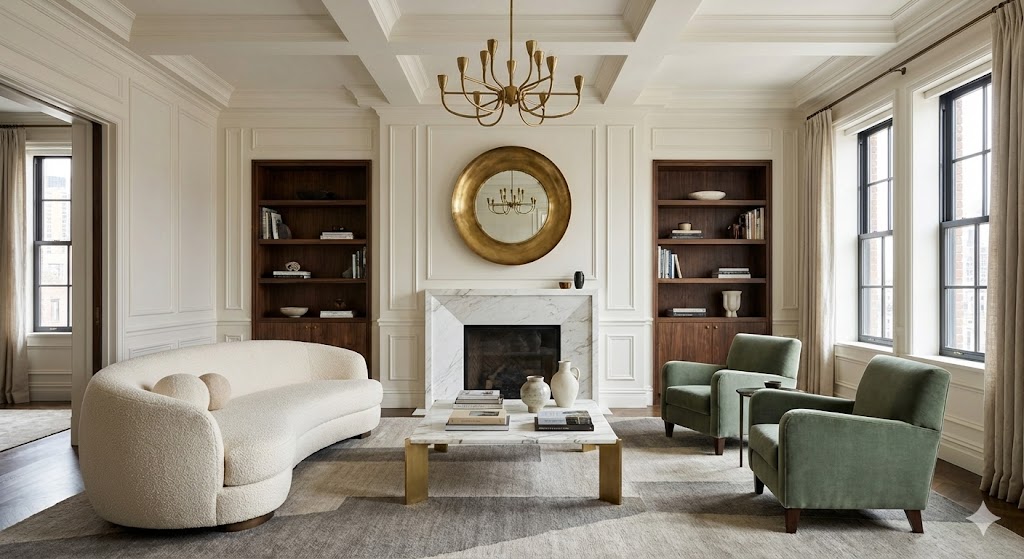
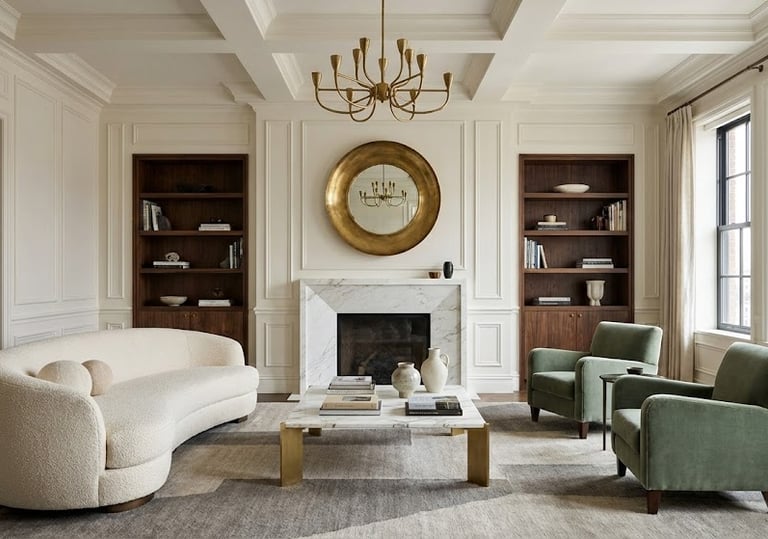
Symmetry & Proportion: The layout is deeply rooted in classical balance, often centered around architectural focal points like fireplaces or large windows to create a sense of formal order.
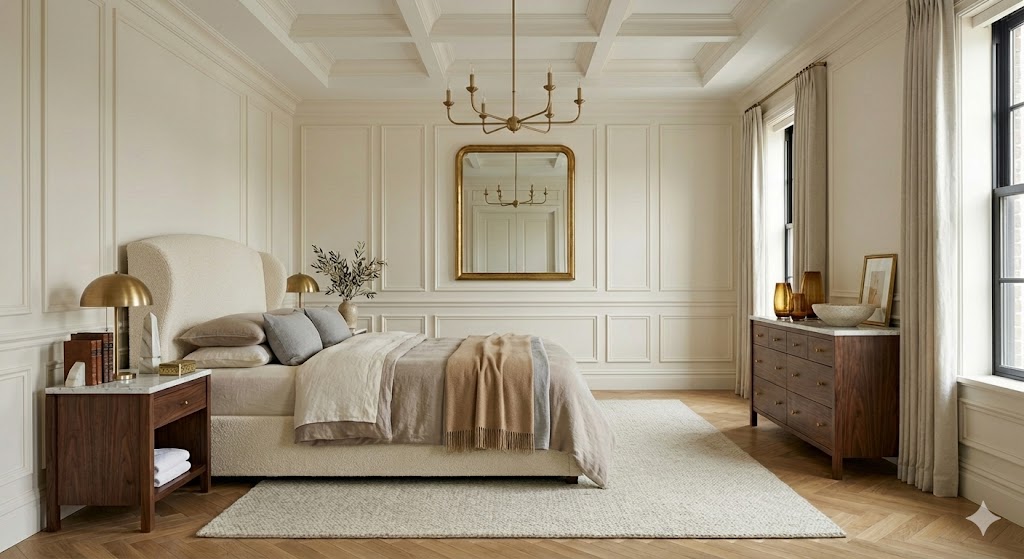
Architectural Detailing: Features a heavy emphasis on "structural" beauty, including crown moldings, wainscoting, wall paneling, and coffered ceilings that add depth and history to the space.
Refined Restraint: While it values ornamentation, it is practiced with modern discipline. The design avoids the "clutter" of traditional styles, favoring curated, high-impact pieces over excessive decoration.
Material & Design Elements
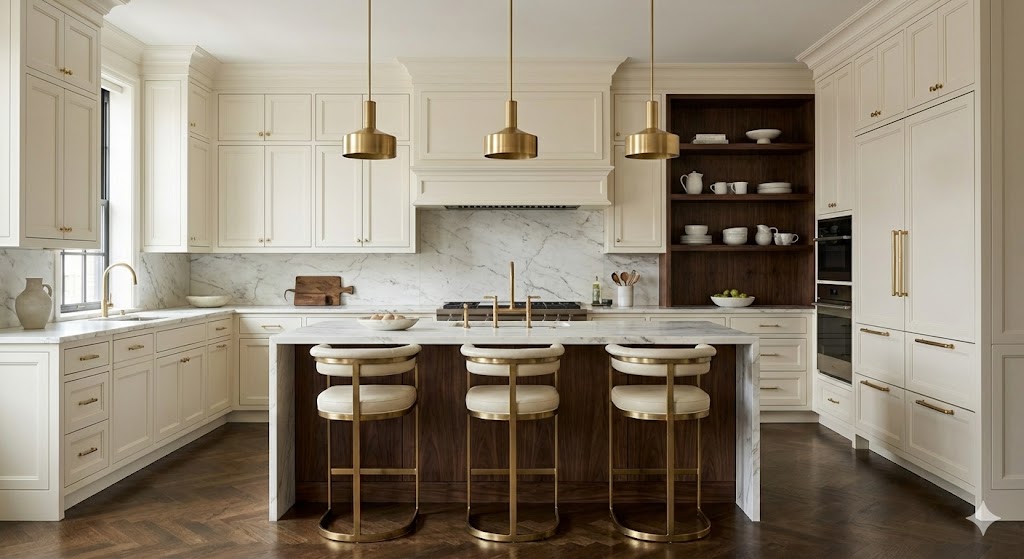
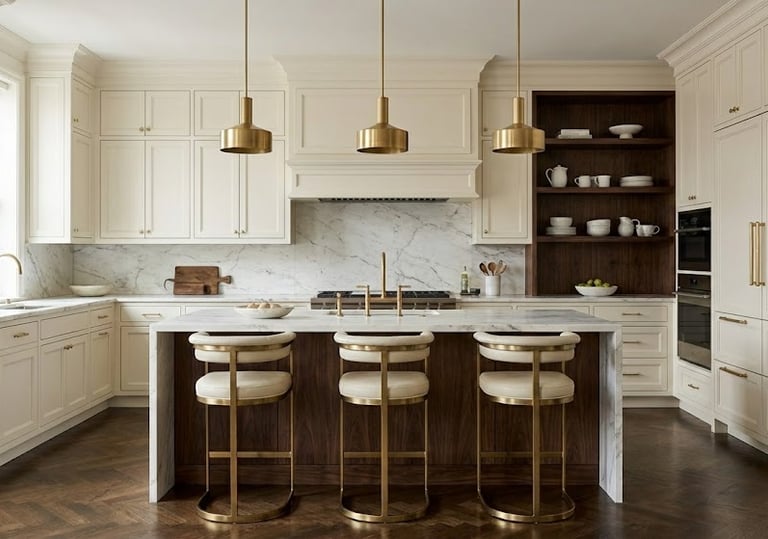
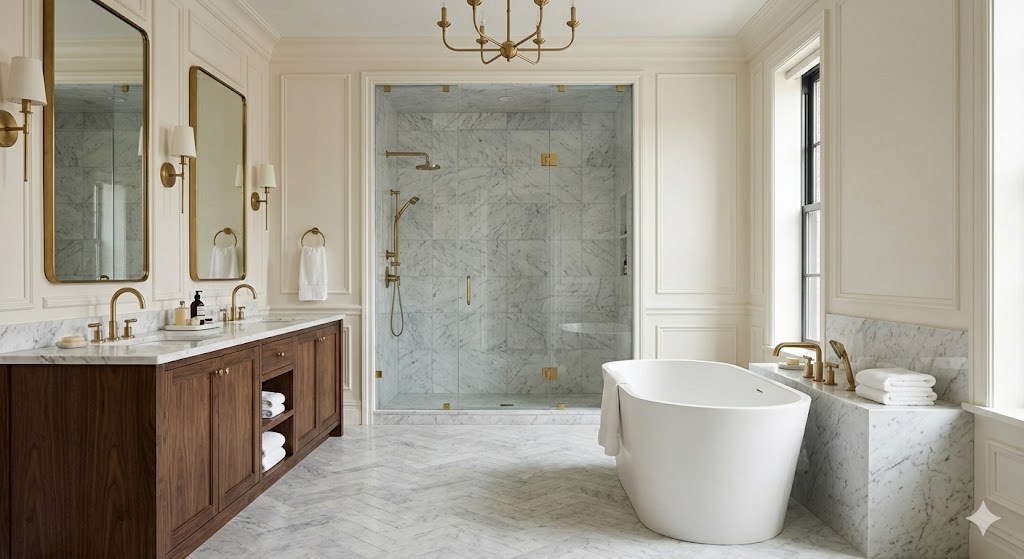
High-Quality Wood & Millwork: Features walnut, oak, and dark-stained ash. Custom painted millwork—often in warm whites or greige—is essential for defining the room’s architectural character.
Polished Stones & Refined Metals: Utilizes premium surfaces such as Carrara or Calacatta marble and limestone. Metals are typically polished or brushed finishes like gold, brass, and nickel for a sophisticated glow.
Structured Textiles: Upholstery is tailored and firm rather than casual. Fabrics include luxurious textures like velvet, silk blends, wool, and boucle that provide a tactile sense of luxury.
Neutral & Layered Palette: Dominated by a foundation of cream, taupe, and soft gray. Depth is added through muted accent tones like deep navy, forest green, or burgundy.
Statement Accents: Often incorporates oversized mirrors, symmetrical table lamps, and sculptural lighting fixtures that act as functional pieces of art.
Why It Remains Popular
Timeless Sophistication: It offers a sense of stability and permanence, communicating maturity and success without relying on passing trends.
Warm Professionalism: Unlike purely modern interiors, it avoids feeling "cold" by incorporating traditional textures and symmetry, making it highly livable and welcoming.
Balanced Heritage: It provides a way to respect the history of a building while modernizing it for today's lifestyle, striking the perfect chord between nostalgia and progress.
When to Choose This Style
Historic & Luxury Properties: Best suited for renovated historic homes, suburban luxury residences, or urban apartments where a sense of establishment and grace is desired.
Formal Living Areas: Ideal for entry foyers, dining rooms, and primary bedrooms where symmetry and architectural detailing can create a grand, polished impression.
Upscale Urban Living: Perfect for homeowners who appreciate the elegance of the past but want their environment to feel fresh, current, and organized.
Living Room
Kitchen
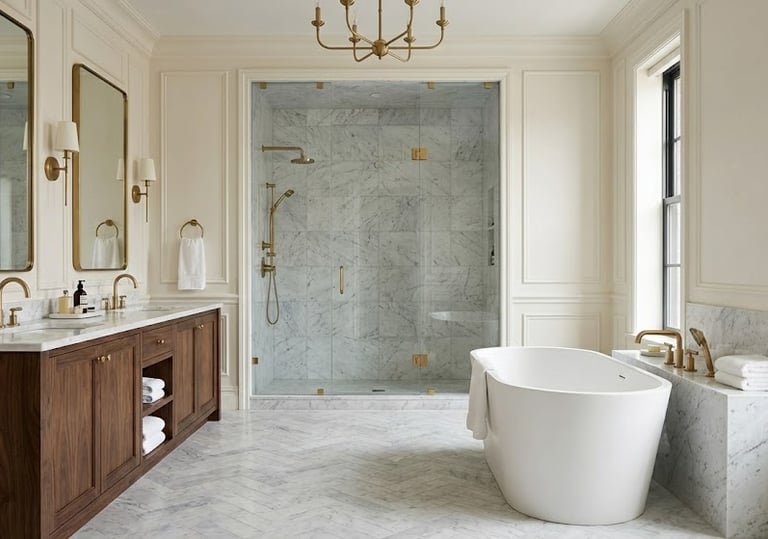
Bathroom
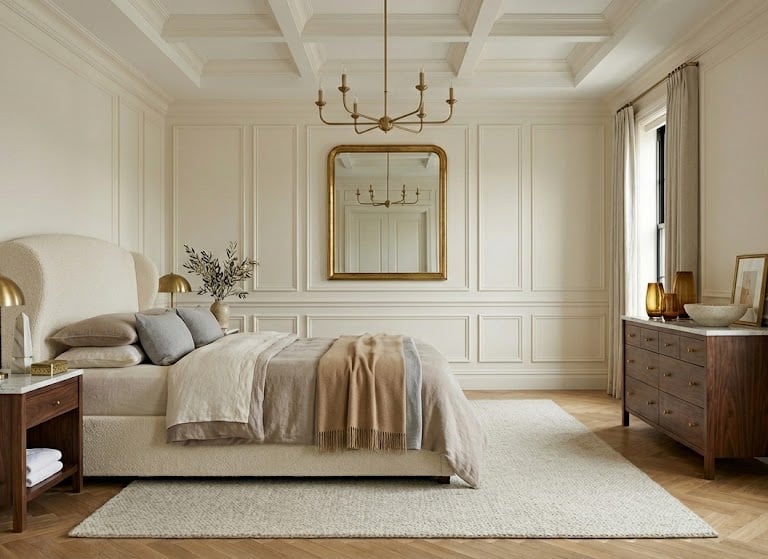
Bedroom
Get in Touch
hello@appleandblueberry.com
© 2025. All rights reserved.