
What Is Contemporary Interior Design?
Contemporary design is the art of the "now." Unlike Modern design, which is rooted in a specific mid-20th-century historical period, Contemporary design is a fluid and ever-evolving aesthetic that reflects the preferences and innovations of the present moment. It is a living style that borrows elements from various eras—such as Art Deco, Traditional, and Modernism—and reinterprets them through the lens of current technology, sustainability, and global trends.
Key Characteristics
Fluid Evolution: This style is not bound by a strict set of historical rules; it shifts constantly to reflect the current zeitgeist, making it the most dynamic of all interior aesthetics.
Softened Geometry: While it maintains the clean lines associated with modernism, it frequently embraces curves, rounded edges, and softer forms to create a more welcoming and less rigid environment.
Eco-Conscious Integration: A defining hallmark of today’s Contemporary design is a primary focus on sustainable practices, energy efficiency, and high-performance smart-home technology.
Material & Design Elements
Innovative Sustainability: Increasingly utilizes responsible materials such as bamboo, cork, and recycled glass to achieve a high-end look with a reduced environmental impact.
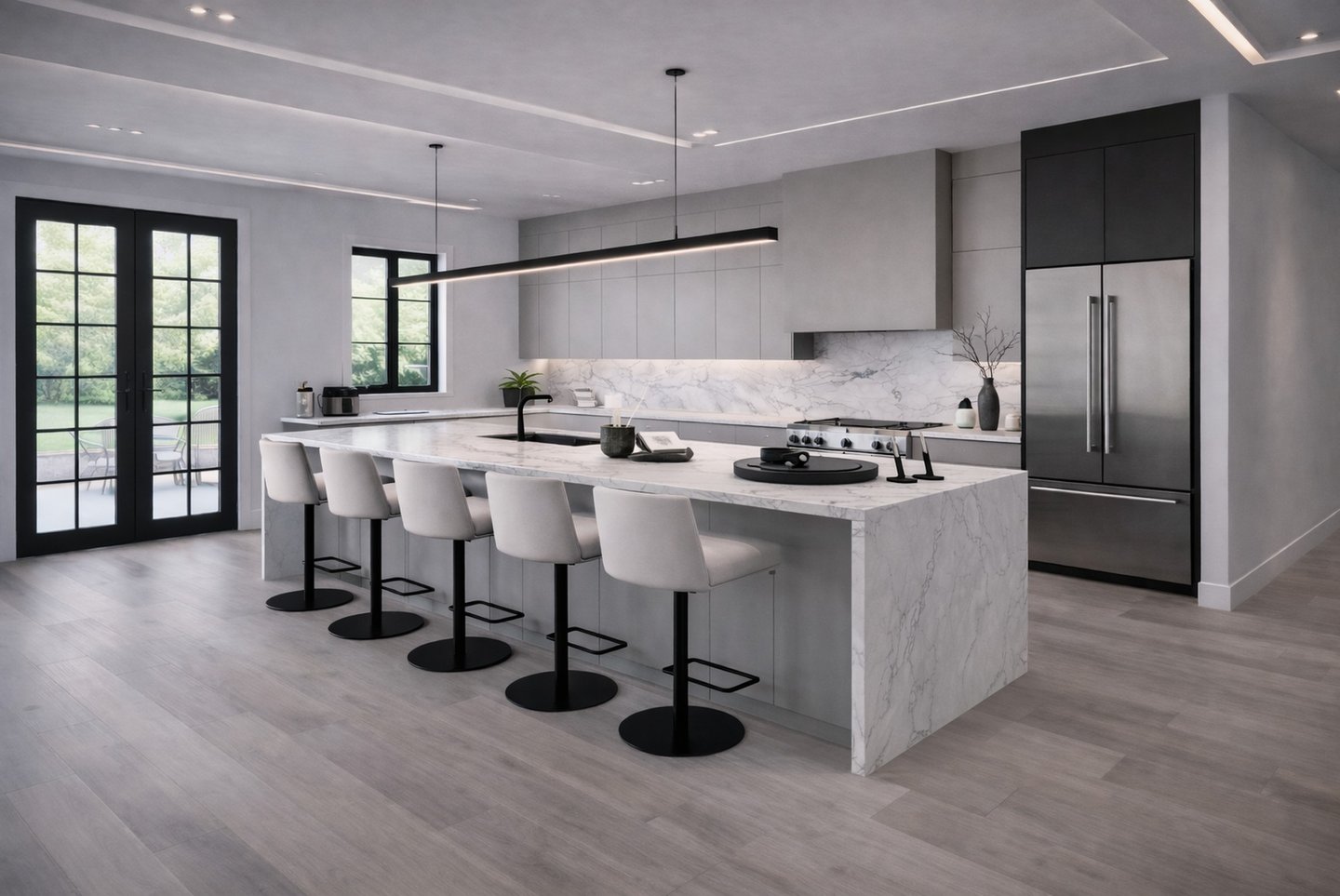
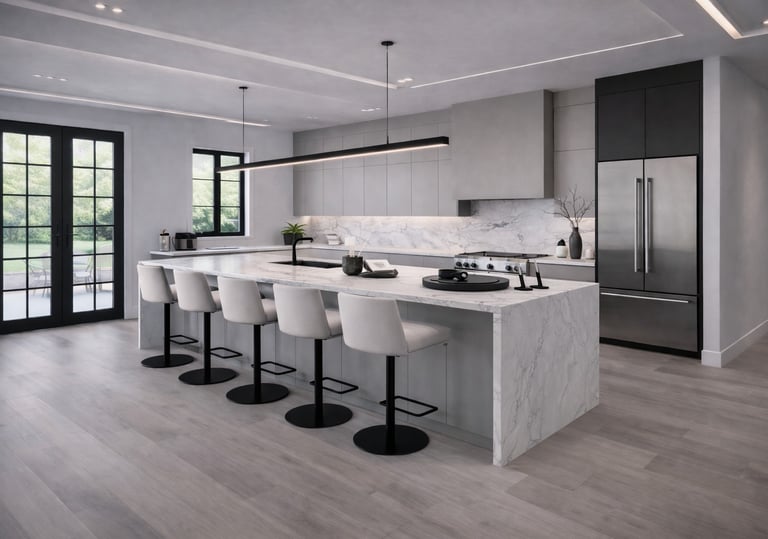
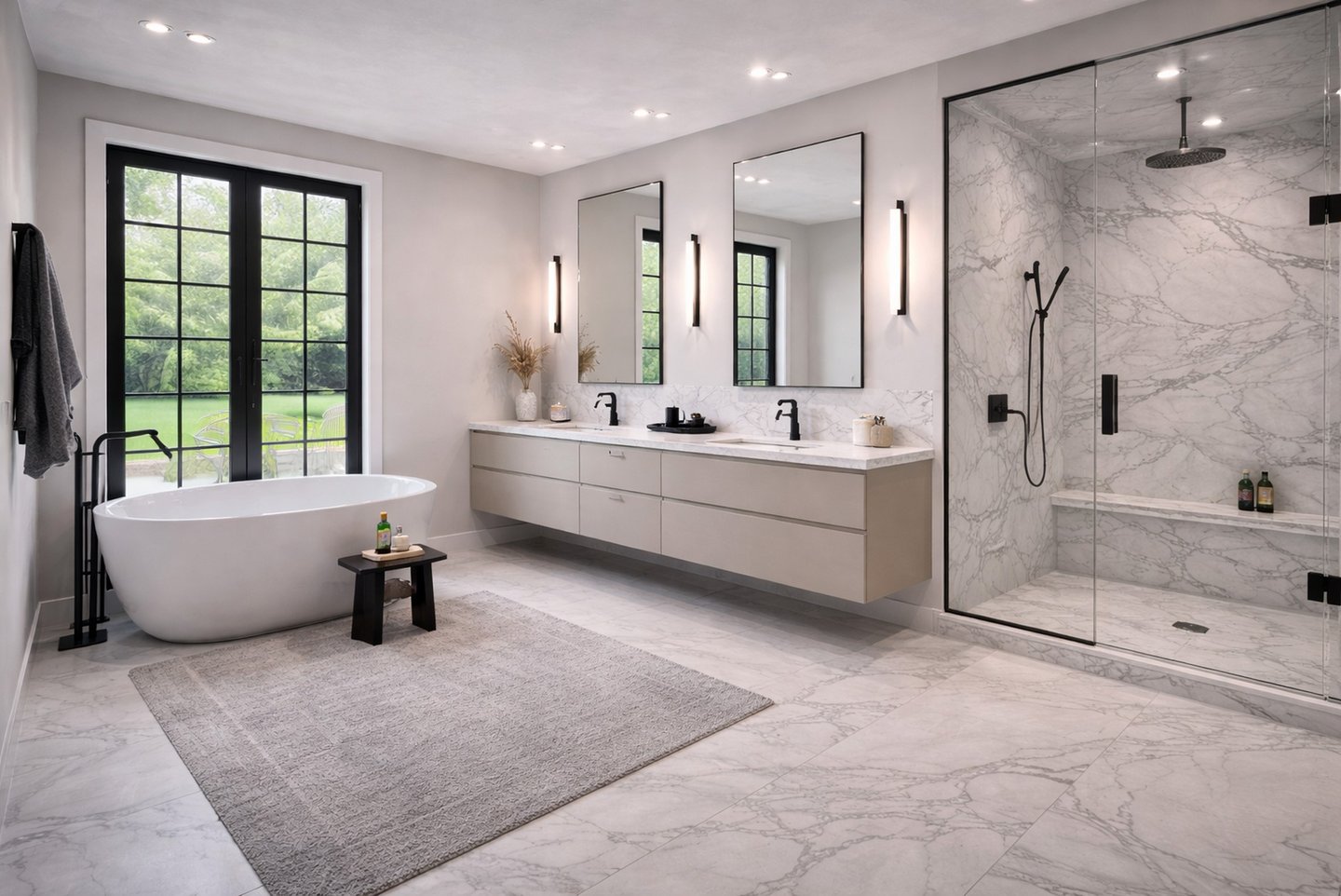
Sleek & Mixed Metals: Features a diverse array of metal finishes, particularly brushed nickel, stainless steel, chrome, and matte black, used for hardware and architectural accents.
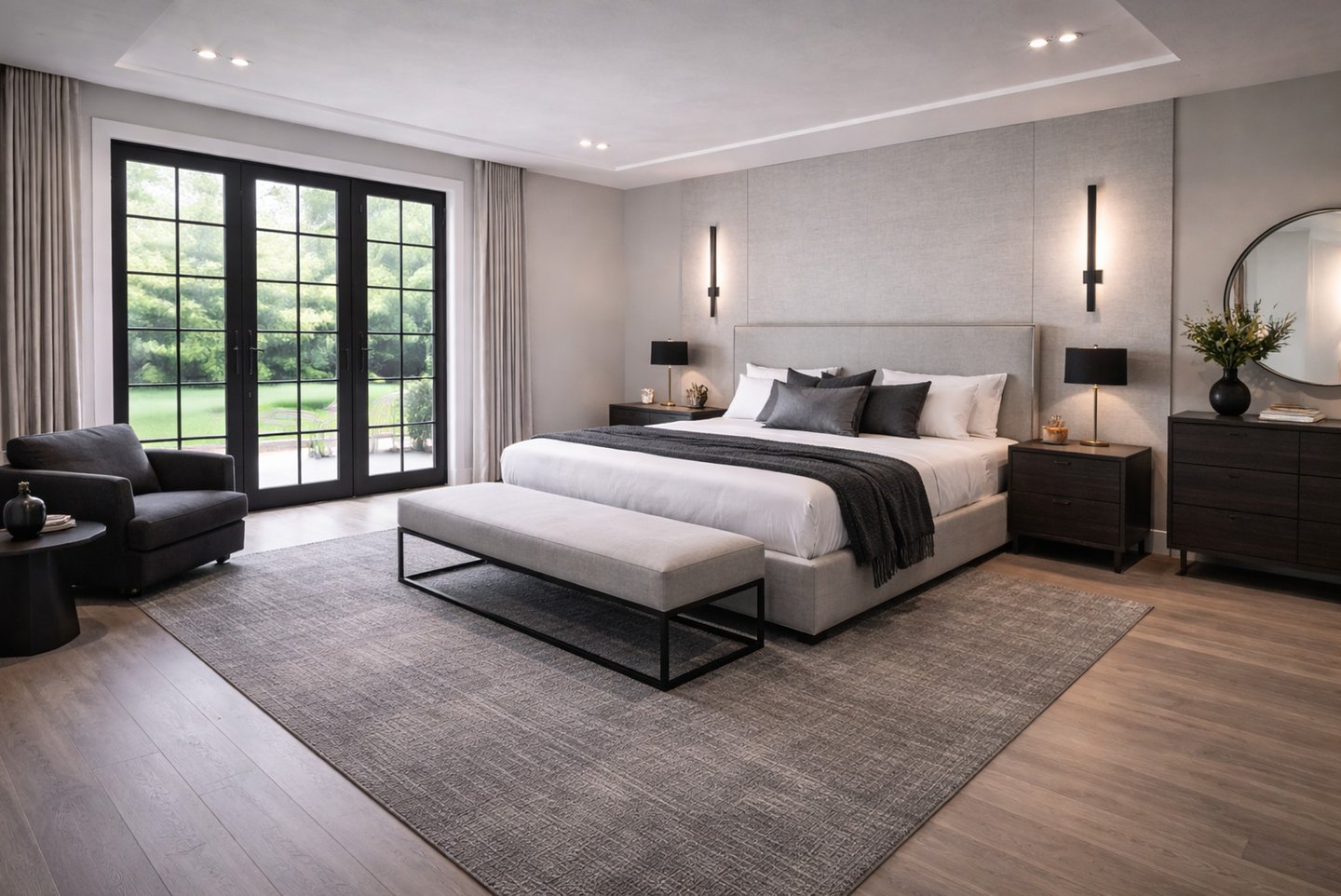
Tactile Textiles: Focuses on solid-colored but highly textured fabrics like wool, cotton, and linen. Velvet is often introduced to provide a layer of luxury and depth.
Transparency & Visual Lightness: Frequent use of glass and Lucite elements to maintain an unobstructed flow of light and sightlines throughout the home.
Sculptural LED Lighting: Light fixtures are treated as artistic statements, utilizing advanced LED technology to create unique, fluid, and sculptural forms that define the room's character.
Why It Remains Popular
Fresh & Current Sophistication: It appeals to those who want their home to feel relevant and updated, incorporating the latest aesthetic and technological innovations.
Creative Freedom: Because it is not tied to rigid historical codes, it offers a high degree of flexibility, allowing homeowners to mix and match elements to suit their personal tastes.
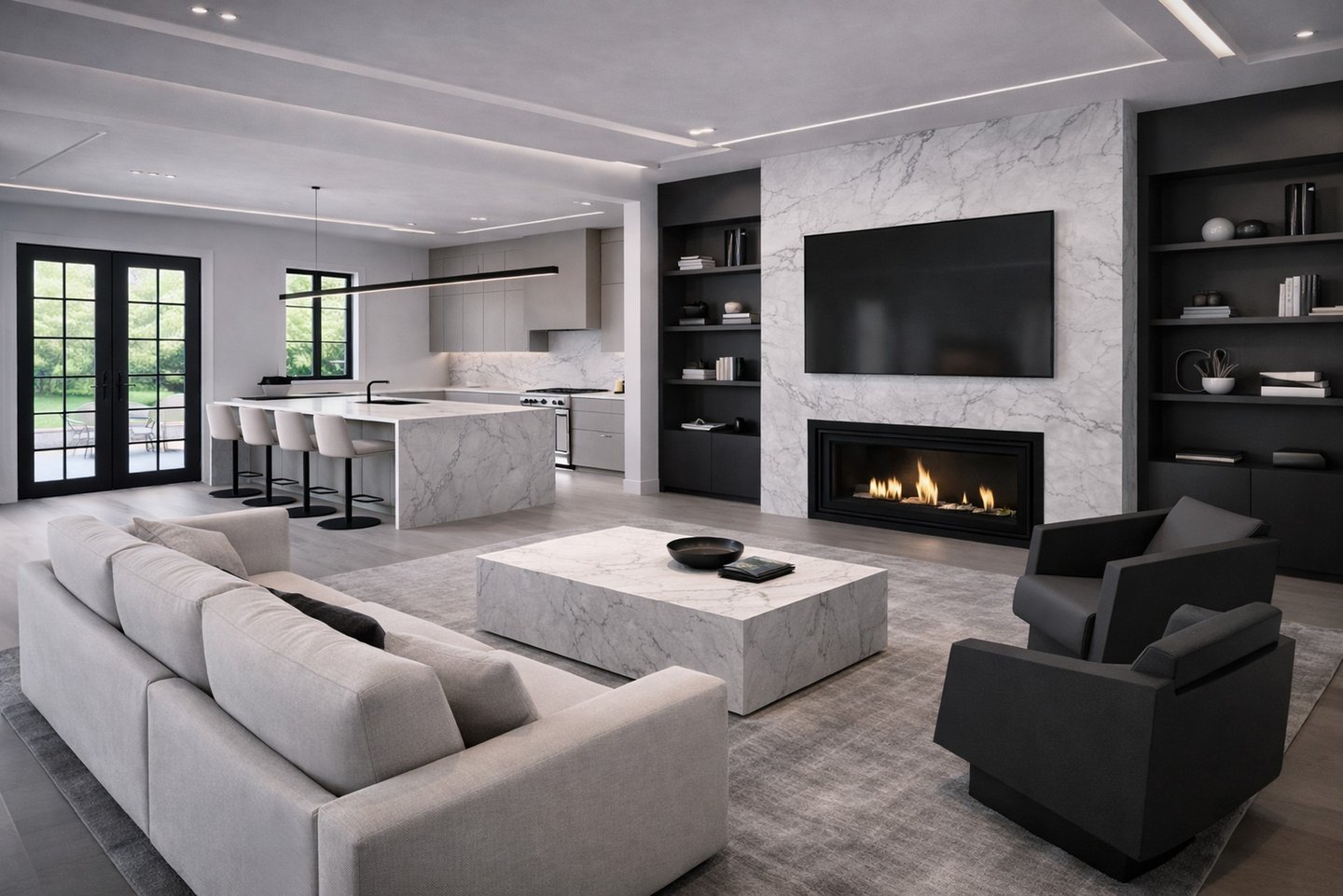
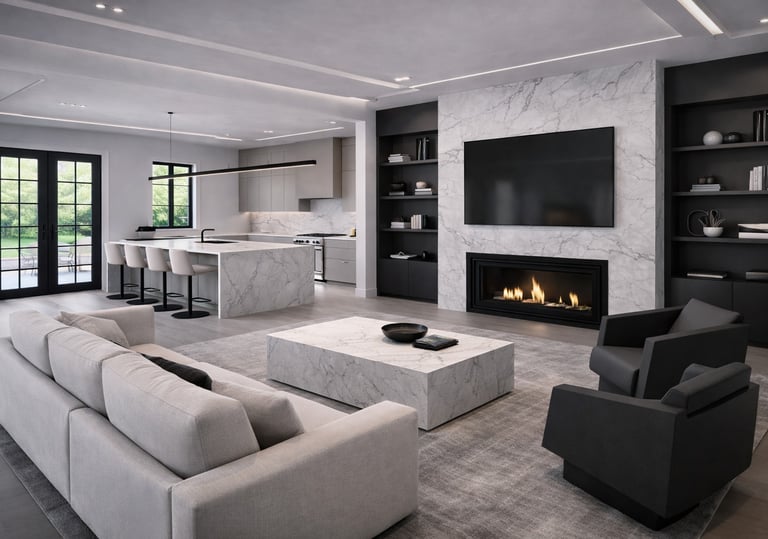
Spatial Optimism: By favoring open floor plans and an abundance of natural light, it creates environments that feel airy, bright, and forward-looking.
When to Choose This Style
New Construction & Modern Shells: Exceptionally suited for newly built homes or renovated spaces where the architectural envelope is relatively neutral.
Dynamic & Evolving Decorators: Ideal for those who enjoy updating their space frequently; the neutral foundation allows for easy swaps of accessories and art to stay on-trend.
Urban & Professional Environments: Particularly effective in high-rise condos, city apartments, and corporate offices where a sharp, professional, and innovative image is desired.
Living Room
Kitchen
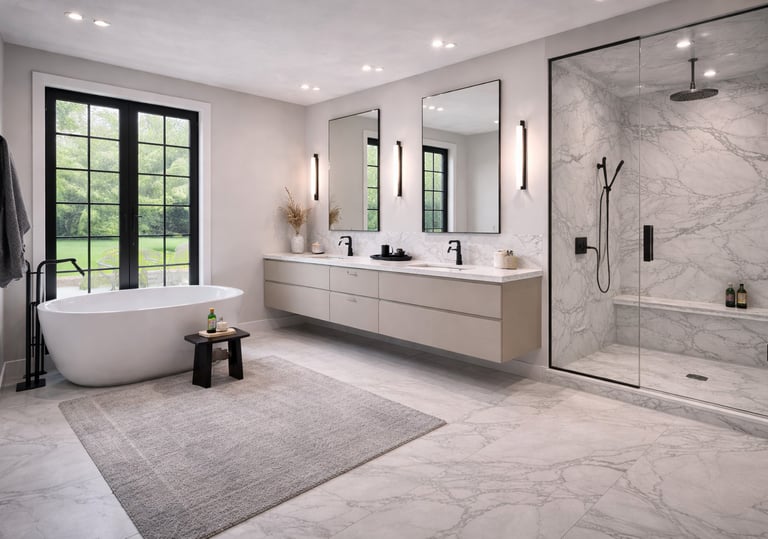
Bathroom
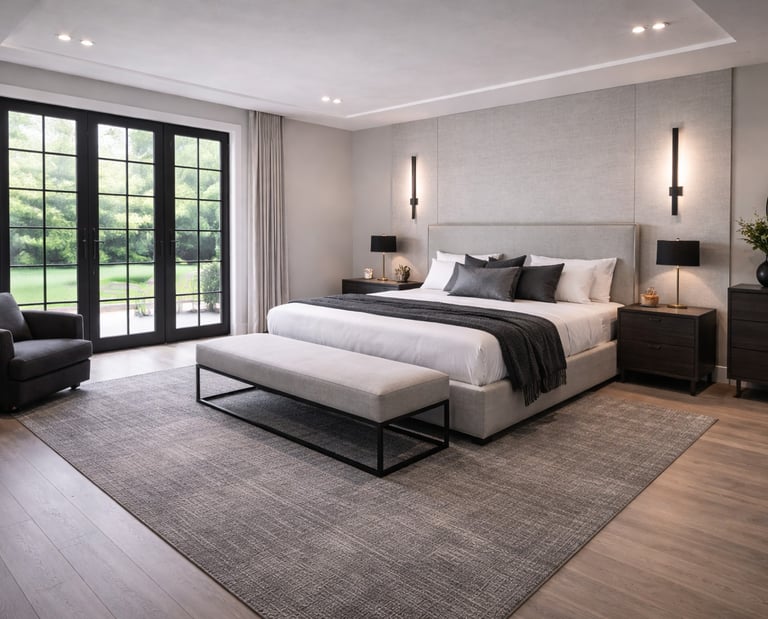
Bedroom
Get in Touch
hello@appleandblueberry.com
© 2025. All rights reserved.