
What Is Bauhause Interior Design?
Bauhaus design is the art of purposeful simplicity, born in Germany in 1919 through the influential Bauhaus School founded by Walter Gropius. This movement sought to unify art, craft, and industrial production into a single, rational design philosophy. Unlike purely decorative styles, Bauhaus is rooted in the principle that "form follows function"—every object must serve a clear purpose, and beauty emerges from efficiency, proportion, and structural honesty.
Key Characteristics
Functional Purity: Every element exists for a reason. Ornamentation is eliminated in favor of clean construction, structural clarity, and absolute usability.
Geometric Discipline: Features a strong reliance on primary shapes—squares, rectangles, circles, and cylinders. Compositions are balanced and harmonious, yet often asymmetrical.
Industrial Honesty: Materials are celebrated for what they are. Steel looks like steel and glass looks like glass; the underlying structure of a building or piece of furniture is not hidden but highlighted as a design feature.
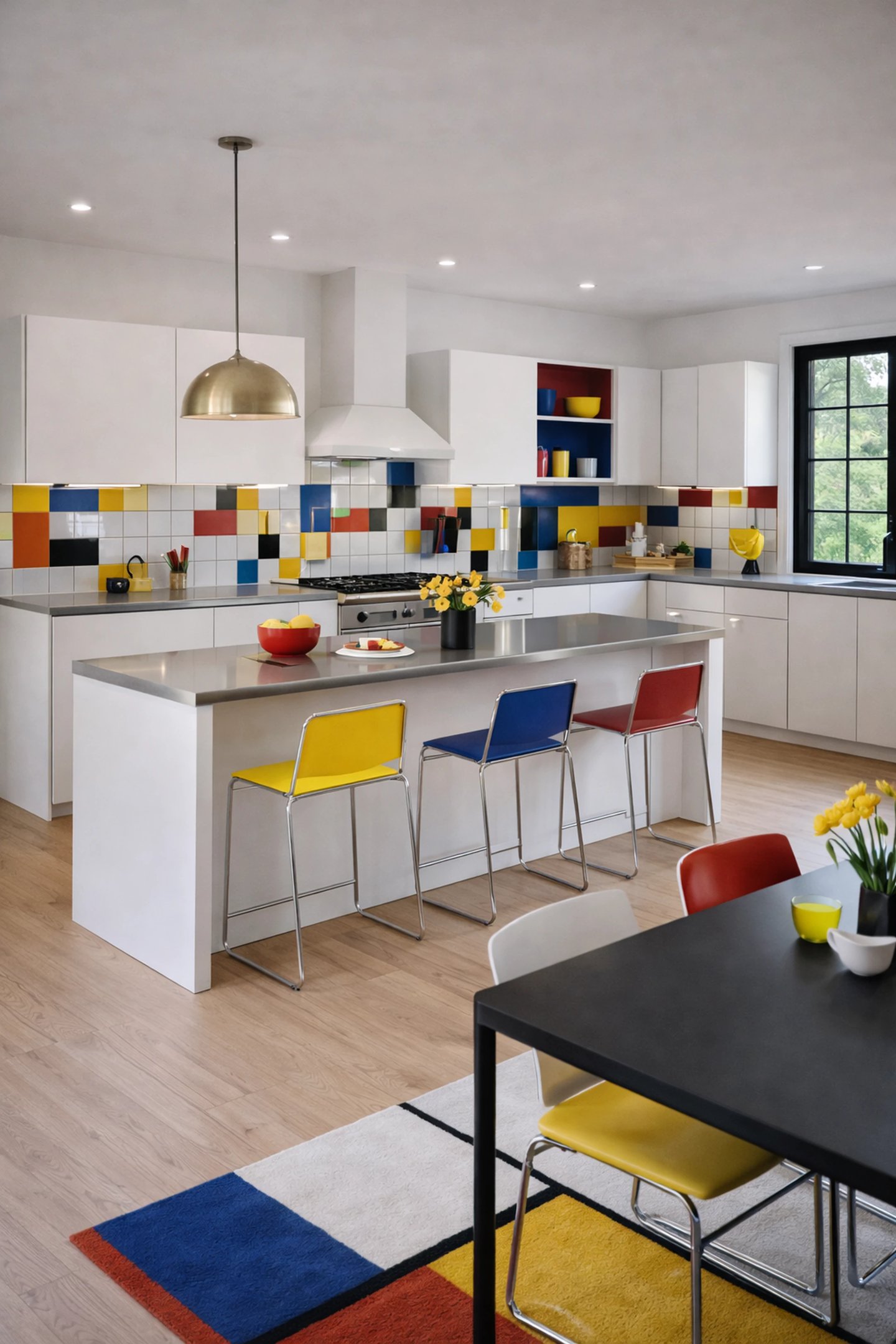
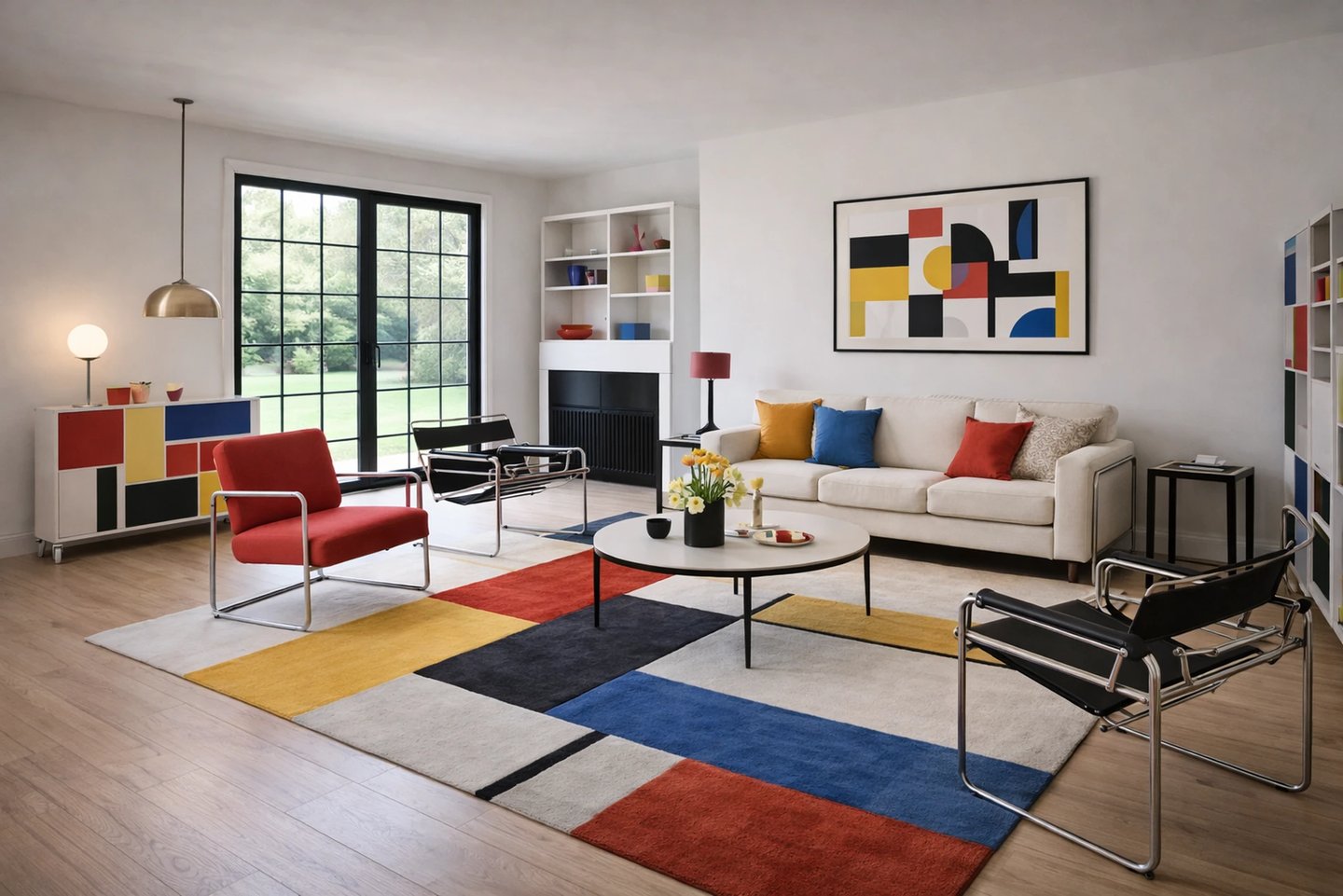
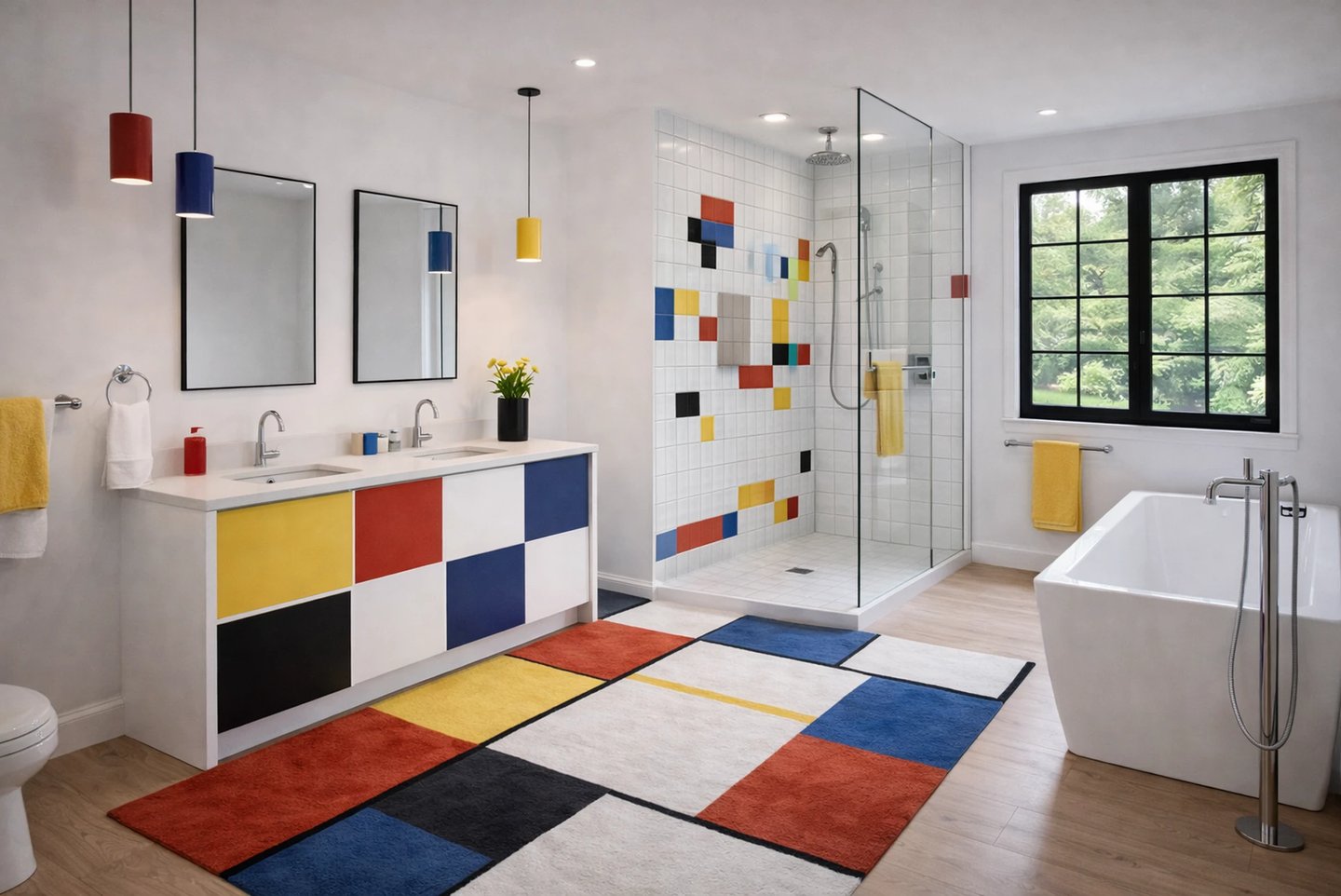
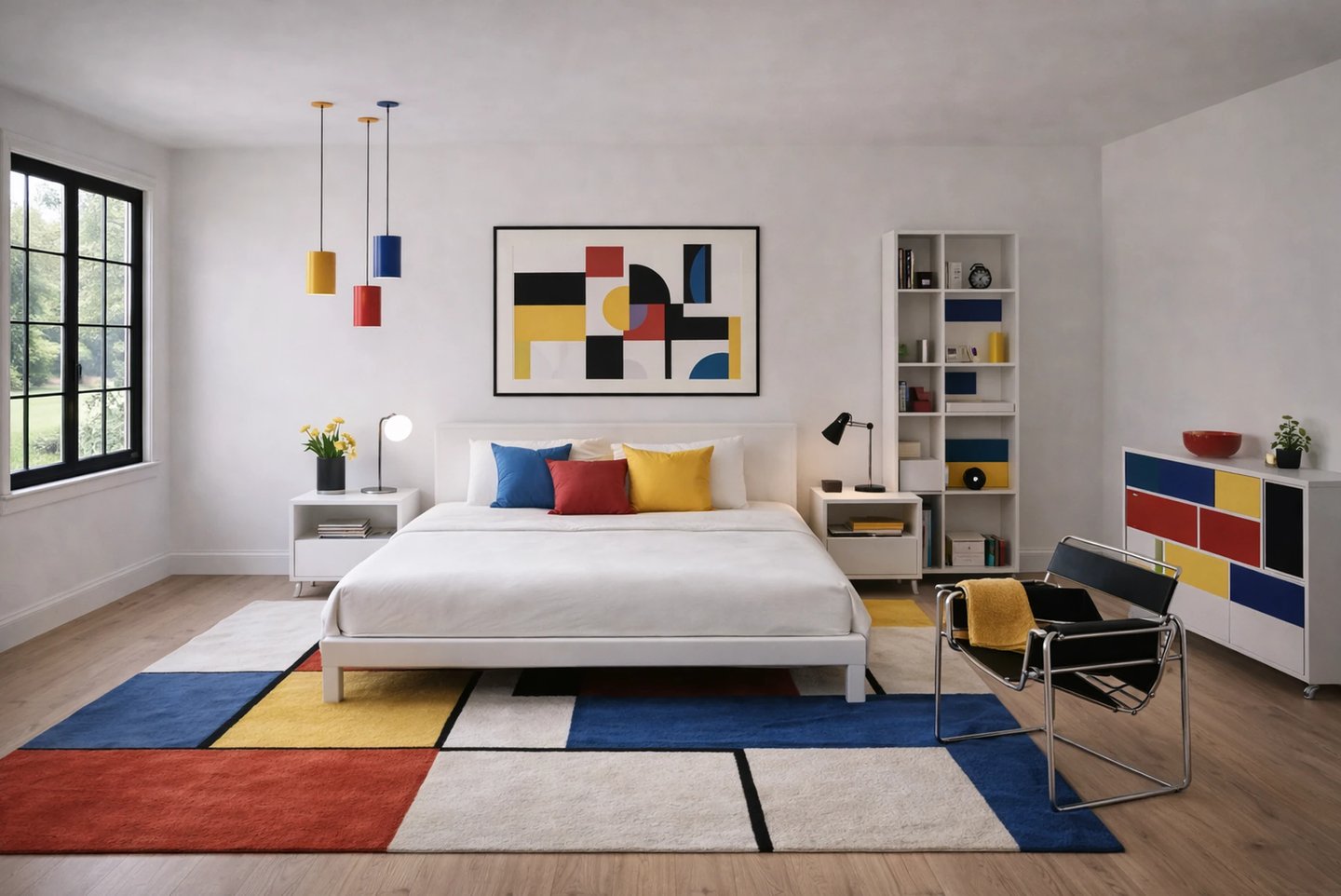
Primary Color Theory: Influenced by De Stijl and modernist art, Bauhaus interiors often feature a controlled and strategic use of primary colors (red, blue, and yellow) against neutral backgrounds.
Material & Design Elements
Tubular Steel & Chrome: Iconic furniture pieces often feature bent steel frames, such as cantilever chairs or the famous Wassily chair, emphasizing industrial engineering.
Glass & Transparency: Extensive use of large windows, glass partitions, and reflective surfaces to enhance light and maintain spatial clarity.
Flat Surfaces & Clean Planes: Smooth white walls, flat-panel cabinetry, and linear compositions dominate the architectural envelope to avoid "visual noise."
Minimal Textiles: Focuses on solid colors and minimal patterns. Upholstery is typically functional and durable, using materials like leather, canvas, or wool.
Integrated Lighting: Features simple pendants, globe lights, and exposed functional fixtures. Lighting is treated as an architectural component rather than a decorative accessory.
Why It Remains Influential
Timeless Rationalism: Bauhaus laid the fundamental groundwork for modern architecture and interior design worldwide, proving that the industrial could be beautiful.
Industrial Elegance: Its blend of engineering precision and artistic balance continues to inspire contemporary minimalism and luxury "high-tech" designs.
Design Legacy: Many iconic furniture pieces designed over a century ago remain in high-end production today, reflecting the style's enduring relevance and sophisticated logic.
When to Choose This Style
Architectural Minimalists: Ideal for those who appreciate the beauty of structure, geometry, and clarity over unnecessary ornament.
Modern & Urban Spaces: A perfect fit for lofts, gallery-style homes, and city apartments with open-concept layouts and high ceilings.
Design Purists: Best suited for homeowners who value historical design integrity, disciplined aesthetics, and a home that feels like a coherent piece of engineering.
Living Room
Kitchen
Bathroom
Bedroom
Get in Touch
hello@appleandblueberry.com
© 2025. All rights reserved.